Retirement is a reality for everyone, but for people working in the unorganized sector of India—such as daily wage laborers, small shopkeepers, auto-rickshaw drivers, domestic workers, farmers, and other informal workers—there is often no financial safety net in old age. Unlike those employed in government or large private organizations who receive pensions or retirement benefits, unorganized sector workers depend heavily on their limited savings or on family support in their later years.
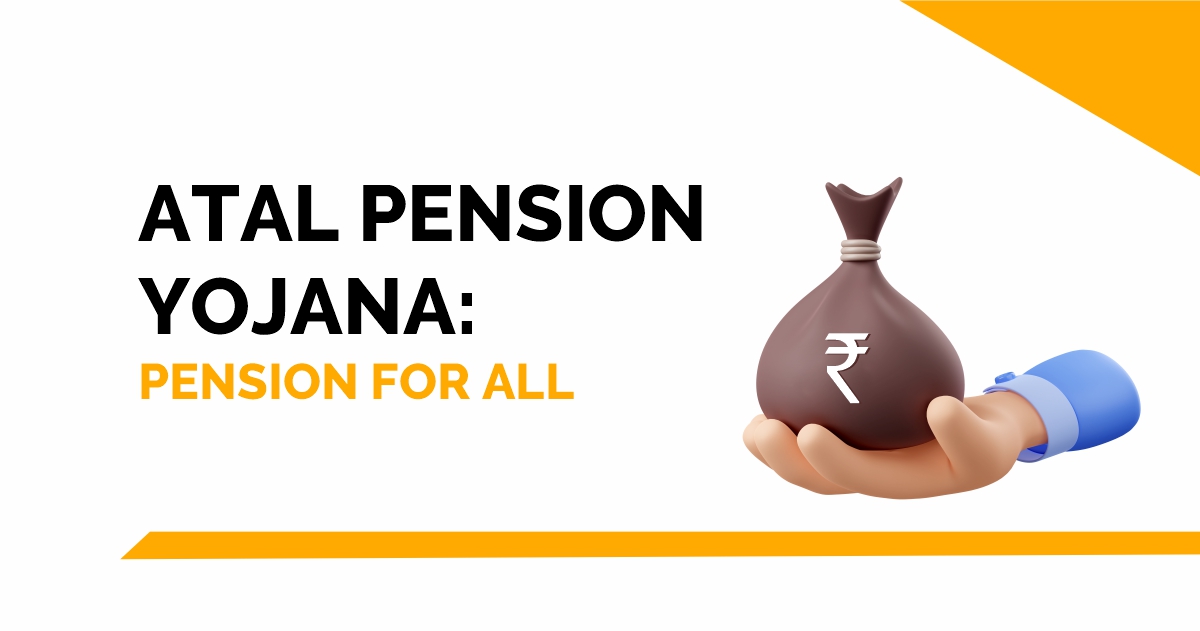
To bridge this critical gap, the Government of India launched the Atal Pension Yojana (APY) on 9th May 2015, named after former Prime Minister Atal Bihari Vajpayee. This pension scheme provides guaranteed income security to individuals after they reach the age of 60 years, encouraging voluntary savings and addressing the problem of financial insecurity among the elderly poor.
Why Atal Pension Yojana is Important
India’s workforce is largely dependent on the unorganized sector, which contributes around 80–85% of total employment. Unfortunately, most of these workers do not have access to pensions, provident funds, or employer-based retirement benefits. With increasing life expectancy, the need for sustainable income in old age has become crucial.
The APY was designed to:
- Encourage small but regular savings during the working years.
- Provide a guaranteed monthly pension after retirement.
- Offer financial security to families of unorganized sector workers.
- Build a culture of self-reliance and reduce dependence on welfare programs in old age.
Core Features of Atal Pension Yojana
- Target Group:
- Workers in the unorganized sector such as farmers, laborers, drivers, domestic help, etc.
- People from low-income groups who wish to secure their old age.
- Age of Joining:
- Minimum: 18 years
- Maximum: 40 years
- Start of Pension:
- Pension begins at 60 years of age.
- Guaranteed Pension Slabs:
Subscribers can choose from 5 pension amounts:- ₹1,000 per month
- ₹2,000 per month
- ₹3,000 per month
- ₹4,000 per month
- ₹5,000 per month
- Contribution Period:
- Depends on the age of joining.
- Minimum contribution period: 20 years (till the age of 60).
- Auto Debit Facility:
- Contribution is directly debited from the subscriber’s bank or post office account (monthly/quarterly/half-yearly).
- Tax Benefits:
- Contributions are eligible for tax deductions under Section 80CCD(1) of the Income Tax Act.
- Exclusion:
- Since 1st October 2022, individuals who are income tax payers are not eligible to join APY.
Eligibility Criteria
To become a subscriber of APY, one must:
- Be an Indian citizen.
- Be between 18 and 40 years of age at the time of joining.
- Have a savings bank account or post office savings account.
- Not be an income tax payer.
- Provide Aadhaar details for KYC compliance (mandatory).
Benefits of Atal Pension Yojana
1. For Subscribers
- Guaranteed fixed pension ranging from ₹1,000 to ₹5,000 per month after 60 years, depending on contribution.
- The pension continues for the lifetime of the subscriber.
2. For Spouse
- After the death of the subscriber, the spouse is entitled to receive the same pension amount until their own death.
3. For Nominee
- After the death of both the subscriber and spouse, the nominee will receive the entire accumulated corpus (pension wealth).
4. Government Security
- Being a government-backed scheme, returns are guaranteed regardless of market fluctuations.
5. Tax Benefits
- Tax deductions under Section 80CCD(1).
Contribution Mechanism
- The contribution amount depends on:
- The age of entry.
- The chosen pension amount.
- Example:
- A person joining APY at age 18 and choosing ₹1,000 monthly pension will contribute less than someone joining at age 35 for the same pension.
- Younger age of entry = smaller contribution amount = larger benefit in long term.
The detailed APY Subscriber Contribution Chart can be found on the official NSDL/APY website.
Charges, Fees, and Overdue Interest
- If the subscriber fails to maintain sufficient balance in their account, the auto-debit may fail.
- In case of delayed payment, overdue charges are levied.
- PFRDA decides the charges and penalties in consultation with the Central Government.
- If the account remains inactive due to non-payment, it may even be closed.
Exit Options under APY
- Exit on Attaining 60 Years
- Subscriber receives guaranteed monthly pension.
- Spouse continues to receive pension after subscriber’s death.
- Nominee receives pension wealth after death of both subscriber and spouse.
- Voluntary Exit (Before 60 Years)
- Subscriber will get back only their own contributions + accrued interest.
- Government co-contributions (if any) will not be paid back.
- Death Before 60 Years
- Option 1: Spouse can continue contributing until the subscriber would have turned 60. Pension will then begin as per the chosen plan.
- Option 2: The spouse/nominee can withdraw the accumulated corpus immediately.
Application Process
1. Online Method
- Through Net Banking or bank’s digital platform:
- Log into your bank account.
- Search for “Atal Pension Yojana”.
- Fill personal details, nominee details.
- Give consent for auto-debit.
- Submit to activate account.
- Through NSDL Website:
- Select Atal Pension Yojana Registration.
- Complete KYC (Aadhaar OTP, Aadhaar Virtual ID, or XML file upload).
- Fill in pension preference and contribution frequency.
- Add nominee details.
- eSign via Aadhaar OTP.
- Registration completed.
2. Offline Method
- Visit your bank branch or nearest post office.
- Collect and fill the APY application form.
- Provide Aadhaar and bank details.
- Submit with proof of age and identity.
- After verification, your account will be linked, and contributions will auto-debit.
Documents Required
- Aadhaar Card (for KYC and authentication).
- Active Savings Bank / Post Office Account.
- Mobile number linked with Aadhaar for OTP verification.
- Nominee details.
Grievance Redressal
Subscribers can raise grievances:
- Online at NPS CRA NSDL.
- Through CGMS (Central Grievance Management System).
- Each grievance gets a token number.
- Status can be tracked under “Check the status of Grievance”.
- Raising grievance is free of cost.
Advantages of APY Over Other Schemes
- Guaranteed Pension: Unlike schemes linked to market returns, APY provides assured income.
- Government Support: Backed by PFRDA and Ministry of Finance.
- Affordable Contributions: Small monthly amounts lead to lifelong benefits.
- Family Protection: Spouse and nominee also benefit.
- Universal Access: Available to all eligible citizens across banks and post offices.
Challenges and Limitations
- Exclusion of income tax payers reduces participation from middle class.
- Pension amount (₹1,000–₹5,000) may not be sufficient considering inflation.
- Requires long-term commitment (20+ years).
- Penalty charges for delayed payments discourage irregular earners.
Future of APY
The government is considering:
- Increasing pension slabs beyond ₹5,000 in the future.
- Encouraging more digital enrollments.
- Integrating with social security schemes like PMJJBY (life insurance) and PMSBY (accident insurance).
- Expanding financial literacy drives to ensure maximum coverage.