India is experiencing a demographic shift marked by a significant rise in the population of senior citizens. In 1951, the number of elderly individuals was 1.98 crore, which increased to 7.6 crore in 2001 and reached 10.38 crore in 2011. According to projections submitted by the Technical Group on Population Projections (2011-2036) to the National Commission on Population, the senior citizen population in India is expected to increase to 23 crore by 2036, while the total population will grow from 121.10 crore in 2011 to 152.20 crore in 2036. This translates to an increase in the proportion of senior citizens from 8.4% to 14.9% of the total population.
Improved healthcare facilities, better nutrition, and enhanced living standards have contributed to longer life expectancy, but they also bring new challenges related to financial security, healthcare, social engagement, and protection of the elderly. Traditional joint family systems that once provided emotional and financial support to elders are gradually declining, leaving many senior citizens vulnerable to neglect.
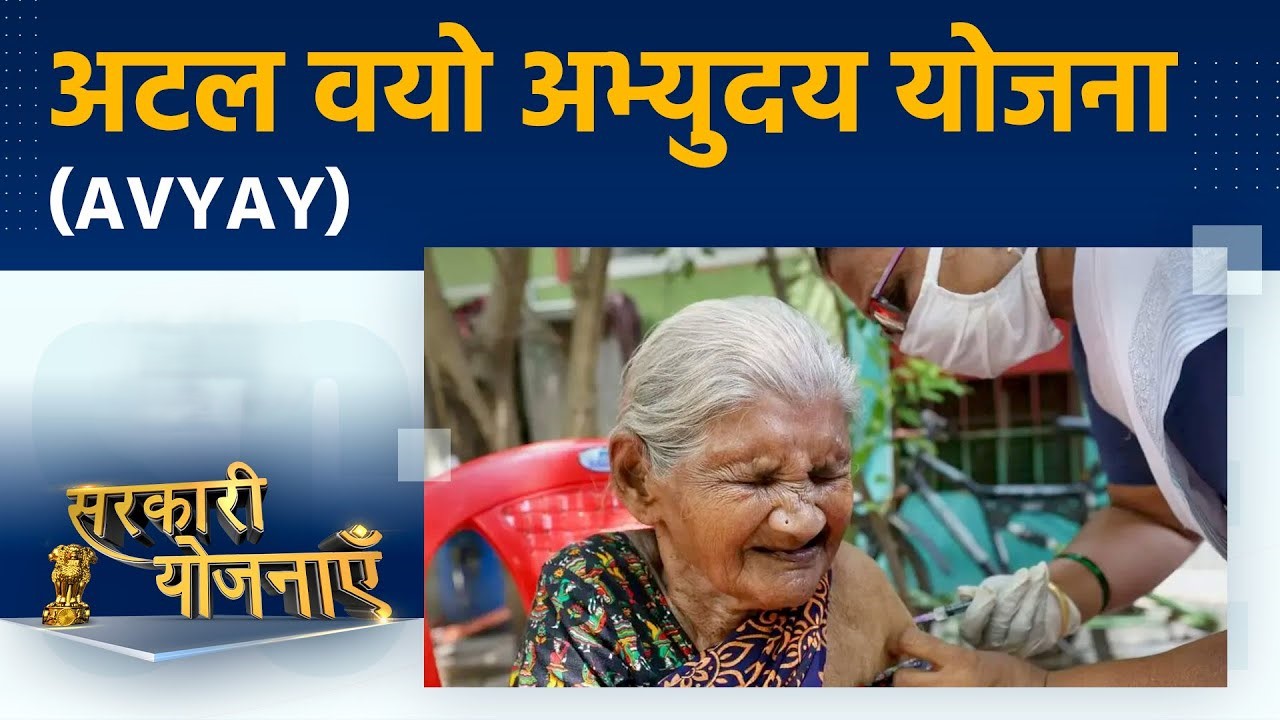
To address these challenges, the Government of India has formulated the National Action Plan for Senior Citizens (NAPSrC), under which the Atal Vayo Abhyuday Yojana (AVYAY) has been implemented. This scheme aims to provide comprehensive welfare, protection, and empowerment of senior citizens across India, enabling them to live dignified, secure, and productive lives.
Objectives of the Scheme
The primary objectives of the National Action Plan for Senior Citizens (NAPSrC) and Atal Vayo Abhyuday Yojana (AVYAY) are:
- Financial Security: Ensuring the economic well-being of senior citizens, including income support and opportunities for financial independence.
- Healthcare and Nutrition: Providing accessible healthcare, preventive services, nutrition support, and geriatric care facilities.
- Shelter and Welfare: Developing and maintaining old age homes and shelters, particularly for indigent senior citizens.
- Protection of Life and Property: Implementing measures to protect senior citizens from abuse, neglect, and exploitation.
- Active and Productive Ageing: Encouraging participation in income-generating activities, skill development, and engagement in productive work.
- Accessibility and Age-Friendly Environment: Promoting infrastructure, transportation, and environments that are accessible to the elderly.
- Awareness Generation and Capacity Building: Sensitizing society, training caregivers, and promoting understanding of elder rights and welfare programs.
- Promoting Silver Economy: Encouraging industries, startups, and entrepreneurship catering to senior citizens.
- Research and Study: Conducting studies and evaluations to inform policy decisions for senior citizens.
- Project Management: Ensuring systematic planning, implementation, monitoring, and evaluation of schemes for the elderly.
The overarching aim is to enable senior citizens to lead independent, empowered, and dignified lives while fostering intergenerational bonding and community integration.
Key Features of the Scheme
The NAPSrC and AVYAY schemes have several key features designed to holistically address the needs of senior citizens:
- Integrated Programs: The schemes combine multiple sub-programs addressing shelter, health, nutrition, livelihood, skill development, and social welfare for senior citizens.
- State Action Plans (SAPSrC): States and Union Territories are empowered to design their own plans aligned with local requirements while receiving financial support from the central government.
- Old Age Homes: Under Section 19 and 20 of the Maintenance and Welfare of Parents and Senior Citizens Act, 2007, old age homes are established to provide shelter, medical care, recreation, and basic amenities for indigent senior citizens.
- Rashtriya Vayoshri Yojana (RVY): Provides physical aids and assisted living devices for senior citizens below the poverty line with a family income not exceeding Rs. 15,000 per month.
- Livelihood and Skilling Programs: Initiatives like SACRED (Senior Able Citizens for Re-Employment in Dignity) and AGRASR Groups (Action Groups Aimed at Social Reconstruction) empower seniors to achieve financial independence and social engagement.
- Promoting Silver Economy: Encourages innovative startups, products, and services catering to elderly care, with equity support up to 49% of total investment.
- CSR Funding for Elderly Care: Facilitates channelization of Corporate Social Responsibility funds into old age homes, day care centers, and other elderly welfare projects.
- National Helpline and Awareness Programs: Provides a helpline for senior citizens and promotes awareness through media campaigns, workshops, and community engagement.
- Monitoring and Evaluation: Structured monitoring by Steering Committees, Project Management Committees, and third-party evaluations ensures accountability and transparency.
Scholarship/Support Amount
While the scheme is not a traditional scholarship program, financial assistance under various sub-components is provided as follows:
- Rashtriya Vayoshri Yojana (RVY): Provides essential physical aids and assisted living devices for senior citizens below the poverty line.
- Livelihood and Skilling Programs: Grants and support for forming Self-Help Groups (SHGs) and participating in income-generating activities.
- Stipends and Funding for Startups: Under Silver Economy promotion, government provides equity investment in innovative startups for senior citizen welfare, not exceeding 49% of total equity.
- CSR Funding Channelization: Mobilization of Rs. 5,000 crore over five years for elderly care projects through corporate participation.
Eligibility Criteria
The eligibility for the NAPSrC and AVYAY schemes is defined based on age and socio-economic criteria:
- Age: All senior citizens aged 60 years and above are eligible for benefits under the scheme.
- Financial Status: Certain sub-schemes such as RVY target senior citizens below the poverty line with a family income threshold of Rs. 15,000 per month.
- Geographical Coverage: All senior citizens residing in India, across rural and urban areas, are eligible for participation in welfare programs.
- Engagement in Programs: For livelihood and skilling programs, senior citizens should be willing to participate in self-help groups, training programs, or entrepreneurship initiatives.
Reservation Policy
While the scheme broadly covers all senior citizens, special consideration is given to:
- Indigent Senior Citizens: Priority is provided to those who lack adequate means for subsistence and shelter.
- Rural Elderly: Programs are designed to include rural populations, where traditional support systems are weaker.
- Women and Widows: Special provisions in old age homes and livelihood initiatives may focus on senior women and widows, ensuring safety and social security.
Distribution of Benefits
The distribution of benefits under NAPSrC and AVYAY follows a structured approach:
- Old Age Homes: At least one old age home per district is established with a minimum capacity of 150 senior citizens, providing shelter, food, medical care, and recreation.
- Financial Support: Funds for livelihood and skilling initiatives are provided through State Rural Livelihood Missions (SRLMs) and State Urban Livelihood Missions (SULMs).
- Assisted Living Devices: RVY provides aids such as wheelchairs, walkers, hearing aids, and spectacles for eligible seniors.
- Awareness and Helpline Services: National helplines and web-based portals provide guidance, complaint redressal, and access to government welfare programs.
- Silver Economy: Support for startups and private sector engagement ensures innovative solutions reach senior citizens effectively.
Application Process (Step by Step)
The application process under different components of NAPSrC and AVYAY is structured to ensure transparency and ease of access:
- Identify Relevant Sub-Program: Senior citizens should identify the scheme component that suits their requirements, such as RVY, livelihood programs, or old age home support.
- Submission of Application: Eligible applicants can submit applications to State Governments, UT authorities, or designated implementing agencies such as NISD.
- Documentation Required:
- Proof of age (Aadhaar card, birth certificate, or senior citizen ID)
- Proof of income (for BPL or targeted schemes)
- Address proof and identification documents
- Verification: State authorities or implementing agencies verify the applicant’s eligibility and financial status.
- Approval and Allocation: Once approved, benefits such as devices, financial assistance, or placement in old age homes are provided.
- Engagement in Programs: For livelihood, SHG, and skilling programs, participants may undergo training, form groups, or engage in income-generating activities.
- Monitoring: Beneficiaries’ progress and utilization of benefits are monitored by the Project Management Units and local authorities.
Renewal Policy
- Old Age Homes: Residency in old age homes is reviewed periodically, and extensions are granted based on need and capacity.
- Livelihood Programs: SHG groups and livelihood initiatives undergo annual review, and continued funding is dependent on performance and utilization of funds.
- Assistive Devices: Replacement or maintenance of aids under RVY may be provided based on wear-and-tear, medical necessity, or updated assessment.
Withdrawal Policy
- Voluntary Exit: Senior citizens may voluntarily withdraw from old age homes, livelihood groups, or training programs with proper notice.
- Non-Compliance: Withdrawal of benefits may occur in cases of misuse, non-compliance with program guidelines, or failure to meet eligibility requirements.
- Re-Entry: Beneficiaries who exit programs may reapply in the subsequent financial year, subject to available capacity and funding.
Implementation Mechanism
- Departmental Coordination: The Senior Citizens Division and National Institute of Social Defence (NISD) conceptualize, plan, and implement the scheme in collaboration with other Ministries, State Governments, and autonomous organizations.
- Funding and Resource Allocation: Financial and technical resources are allocated through the Union Ministry of Social Justice and Empowerment.
- State-Level Implementation: States and UTs develop their own action plans (SAPSrC) in line with local needs and priorities.
- Project Monitoring: Implementation is monitored through Steering Committees, Project Management Committees, and third-party evaluations.
Monitoring and Oversight
- Steering Committee: Chaired by the Secretary/Additional Secretary of Social Justice and Empowerment, includes representatives from multiple Ministries and NISD.
- Project Management Committee: Reviews monthly progress, technical and financial compliance, and ensures quality of implementation.
- Screening Committee: Evaluates new proposals and projects for funding, approving them under the guidelines of the Ministry.
- Monitoring Mechanisms:
- Progress reports on portal
- Field inspections and live tracking
- Monthly and half-yearly reviews
- Annual evaluation by the Minister
- Third-party evaluation for continuous quality assurance