India’s economy thrives on the contribution of small traders, shopkeepers, and self-employed individuals. From the neighbourhood kirana shop owner to the local tailor, carpenter, and other service providers, these individuals form the backbone of the unorganised sector. However, when it comes to social security, particularly in old age, this vast community has remained vulnerable for decades.
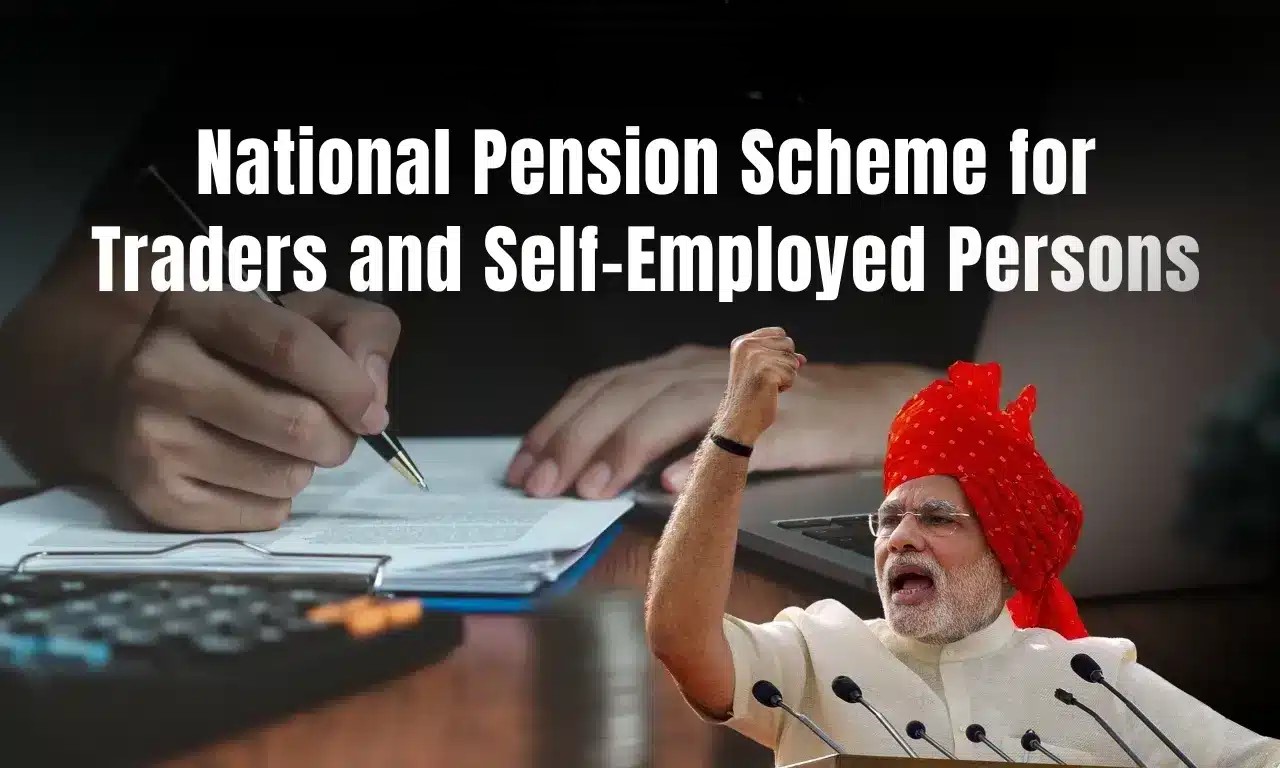
Recognising this gap, the Government of India launched the National Pension Scheme for Traders and Self-Employed Persons (NPS-Traders) in September 2019. This scheme was specially designed to extend the benefits of old-age income security to small traders and self-employed individuals who are not covered under existing social security programs.
By providing an assured pension of ₹3,000 per month after the age of 60, along with family pension provisions, the scheme reflects the government’s vision of an inclusive social protection framework.
Objectives of the Scheme
The primary objectives of the NPS-Traders are:
- Social Security for the Unorganised Sector – To provide financial stability during old age to those who lack formal pension coverage.
- Reducing Old-Age Vulnerability – Ensuring that small traders and the self-employed do not fall into poverty after retirement.
- Promoting Inclusive Growth – Bringing unorganised workers into a structured financial safety net.
- Encouraging Voluntary Participation – Creating a contributory pension model where both the individual and government share responsibility.
- Empowering Women Entrepreneurs – Providing equal benefits and encouraging women traders to secure their future.
Eligibility Criteria
The scheme is open to a large section of the trading and self-employed community. However, certain eligibility conditions ensure that the benefits are targeted at those who need them the most.
- Age Limit: 18 to 40 years
- Occupation: Retail traders, shopkeepers, and self-employed persons
- Annual Turnover: Should not exceed ₹1.5 crore
- Exclusions:
- Income tax payers
- Members of EPFO, ESIC, NPS (Government-funded), or PM-SYM (Pradhan Mantri Shram Yogi Maandhan)
This ensures that the scheme benefits those who are outside formal pension systems and belong to the middle and lower-middle segments of society.
Contribution Details
The NPS-Traders is a contributory pension scheme, meaning the subscriber pays a monthly contribution which is matched equally by the Government of India.
- Contribution Range: ₹55 to ₹200 per month
- Dependence on Entry Age:
- A younger subscriber (say 18 years old) will contribute less (₹55/month).
- An older subscriber (say 40 years old) will contribute more (₹200/month).
This progressive contribution model ensures affordability and fairness.
Example:
- A 25-year-old shopkeeper joins the scheme.
- He contributes ₹80 per month.
- The Government contributes ₹80 per month.
- By the time he reaches 60, he becomes eligible for a monthly pension of ₹3,000.
Pension and Family Pension
The core benefit of the scheme is a monthly pension of ₹3,000 after attaining 60 years of age.
But beyond the individual subscriber, the scheme also provides family protection:
- Family Pension: If the subscriber passes away, the spouse receives 50% of the pension amount (₹1,500 per month).
- Continuation Option: If the subscriber dies before the age of 60, the spouse has the option to continue the scheme by contributing regularly until the age of 60.
This ensures that the family does not lose its entire security in the event of the subscriber’s untimely death.
Special Provisions for Women
Although no separate financial provisions exist exclusively for women, the scheme is fully accessible to women traders and self-employed women.
- They can individually register and get the same benefits.
- Encouragement is given through awareness programs to bring women entrepreneurs, shopkeepers, and self-employed women under the umbrella of this scheme.
- The family pension benefit is particularly significant for widows, offering them steady financial support.
Thus, while gender-neutral in structure, the scheme indirectly empowers women by recognising them as independent economic contributors.
Enrollment Process
The government has made the enrollment process simple and accessible through both physical centres and digital platforms.
1. Common Service Centres (CSCs):
- Over 4 lakh CSCs across India serve as enrollment points.
- Applicants can visit with their Aadhaar card, bank details, and mobile number.
- The VLE (Village Level Entrepreneur) at CSC assists in registration.
2. Online Self-Enrollment:
- Interested persons can directly enroll through.
- The portal allows quick registration using Aadhaar and mobile OTP.
This two-way approach ensures inclusion of both digitally savvy youth and those in rural areas with limited internet access.
Current Reach of the Scheme
As of 10th February 2025, a total of 59,144 beneficiaries have been enrolled under the scheme.
While the number is still modest considering India’s vast unorganised sector, it reflects steady progress in outreach. Continuous awareness campaigns are expected to significantly expand coverage in the coming years.
Benefits of the Scheme
- Old-Age Financial Security – A steady monthly pension reduces dependency on family members.
- Government Support – The equal contribution by the Centre doubles the impact of individual savings.
- Family Protection – Provision of 50% family pension ensures security for spouses.
- Inclusive Growth – Covers traders, shopkeepers, and self-employed who otherwise remain outside pension systems.
- Low Entry Barrier – Small monthly contributions make the scheme affordable even for low-income groups.
Challenges and Limitations
While the scheme is progressive, it faces certain challenges:
- Low Awareness: Many traders remain unaware of the scheme.
- Low Enrollment Numbers: Only around 59,000 beneficiaries so far, compared to millions eligible.
- Affordability Issues: Some traders may hesitate to make monthly contributions due to irregular incomes.
- Digital Divide: Online enrollment may not reach all potential beneficiaries in remote areas.
- Overlap with Other Schemes: Some traders may already be covered under PM-SYM or other programs, reducing the target pool.
Addressing these challenges through awareness drives, simplified enrollment, and incentives is essential for scaling up the scheme.
Real-Life Illustrations
To better understand the scheme’s impact, consider the following examples:
- Ramesh, a 30-year-old shopkeeper in Lucknow
- Contributes ₹100 per month.
- The government matches his contribution.
- At 60, he will receive ₹3,000 every month, ensuring dignity in retirement.
- Shanti Devi, a 35-year-old self-employed woman tailor in Jaipur
- Contributes ₹150 per month.
- She becomes eligible for ₹3,000 pension at 60.
- If she passes away, her husband will receive ₹1,500 per month as family pension.
These stories highlight how the scheme translates into real-world security for common people.
Government’s Vision
The NPS-Traders reflects the government’s larger vision of “Sabka Saath, Sabka Vikas, Sabka Vishwas, Sabka Prayas.”
By targeting small traders and the self-employed, the scheme ensures that no hardworking Indian is left behind in old age security. Over time, as awareness spreads and enrollment rises, the scheme is expected to bring millions of small traders into the social security net.