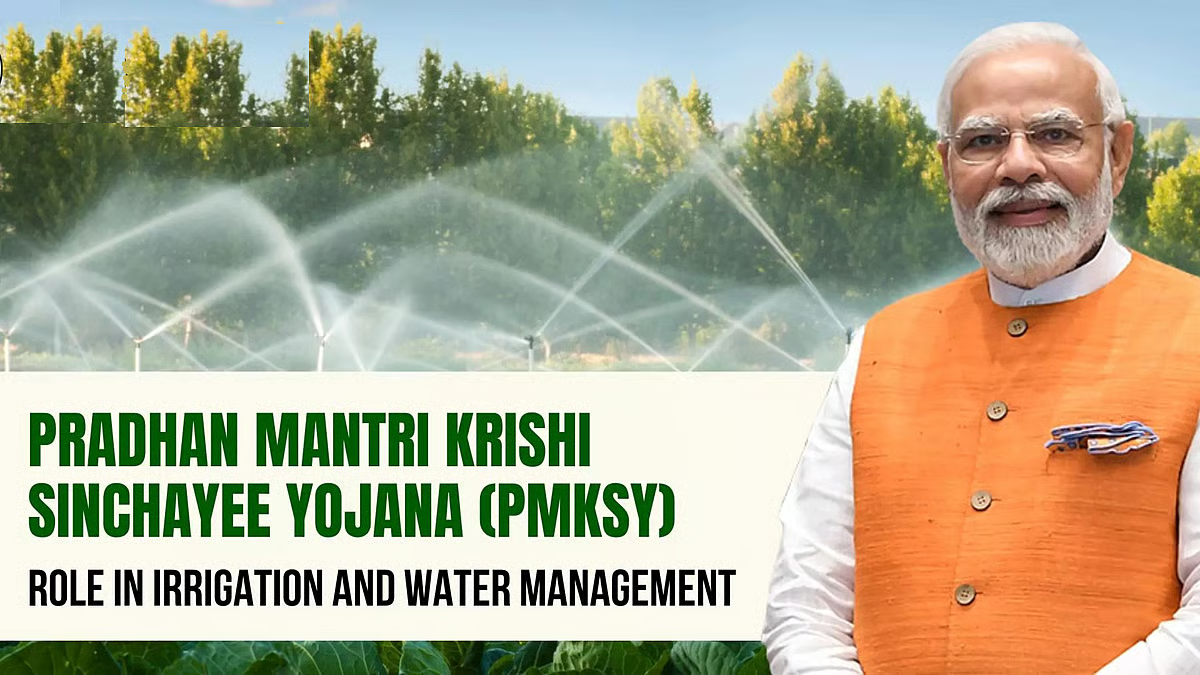
Agriculture is the backbone of India, and water is the most crucial resource that determines its success. To strengthen irrigation facilities, improve water-use efficiency, and encourage farmers to adopt modern techniques of water conservation, the Government of India launched the Pradhan Mantri Krishi Sinchayee Yojana (PMKSY) on 1 July 2015. One of its most important components is Per Drop More Crop, implemented by the Department of Agriculture & Farmers Welfare under the Ministry of Agriculture and Farmers Welfare. This component focuses on micro-irrigation (drip and sprinkler systems), efficient water management practices, and the creation of micro-level water storage structures, ultimately ensuring that every drop of water is used efficiently to increase agricultural productivity and farmer income. The scheme aims to provide farmers across India with financial assistance to adopt micro-irrigation systems and improve irrigation facilities while promoting sustainable farming practices. Through Direct Benefit Transfer (DBT), PMKSY ensures that subsidies reach farmers directly and transparently.
Important Dates of the Scheme
(Dates may vary each year depending on state-level notifications; general scheme dates follow the agricultural cycle.)
- Scheme Launch Date: 1 July 2015
- Implementation Cycle: Ongoing, with annual application cycles at the state and district level
- Application Mode: Offline (state-specific application periods)
- Fund Release Mode: Direct Benefit Transfer (DBT)
Objectives of Pradhan Mantri Krishi Sinchayee Yojana – Per Drop More Crop
The PMKSY Per Drop More Crop component has been designed with multiple strategic objectives to ensure long-term sustainability of irrigation practices in India. Major objectives include:
1. Increase Area Under Micro-Irrigation
To expand the coverage of micro-irrigation technologies such as drip and sprinkler systems across the country, thereby ensuring optimal use of available water resources.
2. Enhance Water-Use Efficiency
The scheme aims to ensure that water reaches crops in precise quantities, reducing wastage and improving the overall efficiency of water used in agriculture.
3. Improve Crop Productivity & Farmer Income
Through precision irrigation, farmers can achieve higher yields at lower water consumption, ultimately increasing their income.
4. Promote Micro-Irrigation in Water-Intensive Crops
The scheme prioritizes water-intensive crops like sugarcane, banana, cotton, and encourages farmers to adopt drip and sprinkler systems.
5. Encourage Fertigation
Promoting the use of micro-irrigation for the application of fertilizers, ensuring precise nutrient delivery, reduced wastage, and better crop health.
6. Improve Water Management in Water-Stressed Areas
The scheme focuses on districts with water scarcity, critical groundwater levels, and regions prone to drought-like conditions.
7. Converge Water-Related Schemes
PMKSY aims to integrate various water management schemes across departments for better irrigation planning and resource utilization.
8. Promote Scientific Irrigation Techniques
Encouraging the adoption of modern scientific technologies in agriculture to improve efficiency and sustainability.
9. Create Employment Opportunities
The installation and maintenance of micro-irrigation systems create jobs for both skilled and unskilled individuals, especially rural youth.
Key Features of PMKSY – Per Drop More Crop
The Per Drop More Crop component is unique because of its focus on efficient water use and micro-level irrigation practices. Some of the major features include:
1. Comprehensive Water Management Approach
The scheme promotes everything from water harvesting to micro-irrigation systems, ensuring a holistic approach to water conservation.
2. Multiple Components under PMKSY
PMKSY comprises four key components:
- Accelerated Irrigation Benefit Programme (AIBP)
- Per Drop More Crop (PDMC)
- Har Khet Ko Pani
- Watershed Development
3. Focus on Micro-Level Structures
Promotes on-farm structures such as water storage tanks, farm ponds, secondary storage tanks, and water lifting devices.
4. State-Level Flexibility
States have the freedom to select any nodal department for scheme implementation based on administrative setup.
5. Subsidy for All Farmers
Financial assistance is available to all farmers—small, marginal, and others—with varying subsidy percentages.
6. Direct Benefit Transfer (DBT)
All subsidies are transferred directly into the bank accounts of beneficiaries to ensure transparency and avoid corruption.
7. Use of BIS-Marked Components
To ensure quality, all micro-irrigation systems installed under the scheme must be BIS-certified.
8. Promotion of Convergence
The scheme encourages linking with solar pumps, river lift irrigation, tube wells, and other water projects.
9. Support for Modern Farming Practices
Promotes fertigation, water-efficient farming, precision irrigation, and scientific water application.
Financial Assistance / Subsidy (Scholarship Amount Equivalent)
Although not a scholarship scheme, PMKSY offers direct financial assistance to farmers, similar in structure to benefit distribution. The subsidy pattern includes:
1. Subsidy for Micro-Irrigation Systems
- Small & Marginal Farmers: 55% Subsidy
- Other Farmers: 45% Subsidy
2. Central and State Government Share
- General States: 60:40 (Center:State)
- North-Eastern & Himalayan States: 90:10
- Union Territories: 100% funding by the Central Government
3. Eligible Activities Under Subsidy
- Installation of drip irrigation
- Installation of sprinkler irrigation
- Water lifting devices
- Water harvesting structures
- Micro-level water storage structures
- Farm pond construction
4. Maximum Subsidy Limit
- Maximum area eligible for subsidy: 5 hectares per beneficiary
Eligibility Criteria
Farmers must fulfill the following criteria to receive benefits under the Per Drop More Crop scheme:
1. Indian Citizenship
Applicants must be citizens of India.
2. Farmer Eligibility
All categories of farmers—small, marginal, medium, and large—are eligible to apply.
3. Landholding Requirement
The applicant must own agricultural land or possess legal documents showing cultivation rights.
4. Maximum Area Covered
Subsidy available for a maximum of 5 hectares per farmer.
5. BIS-Marked Systems
Farmers must purchase only BIS-certified micro-irrigation equipment.
6. Aadhaar Requirement
Aadhaar details are mandatory for receiving subsidy through DBT.
Reservation Policy
Although the PMKSY scheme does not have a caste-based reservation system like scholarship programs, the subsidy percentage automatically provides additional support to small and marginal farmers, many of whom belong to SC/ST/OBC categories.
- Small & Marginal farmers receive 55% assistance, which indirectly supports socio-economically disadvantaged communities.
- State governments may include additional reservations or preference categories at their discretion.
Distribution of Benefits
The distribution system is transparent and entirely digital:
1. Direct Benefit Transfer
All subsidies are transferred directly to the bank account of the farmer.
2. State-Level Approval Process
Each application goes through verification at the Gram Panchayat, Block, and District Agriculture Office.
3. Quality Assurance
Only BIS-marked products are eligible. Inspection teams verify installation before subsidy release.
4. Equal Access
All farmers across states and union territories can apply for benefits, ensuring country-wide coverage.
Application Process (Step-by-Step)
(Offline Mode)
Step 1: Visit Local Agriculture Office
Farmers must visit their Block or District Agriculture Office through the Gram Panchayat based on their requirement.
Step 2: Collect Application Form
The farmer must request the application form for PMKSY – Per Drop More Crop.
Step 3: Fill in the Application
Provide the following details:
- Personal information
- Aadhaar number
- Land details
- Type of micro-irrigation required
- Bank account details
- Crop details
Step 4: Attach Required Documents
Farmers must attach self-attested copies of all the important documents:
- Aadhaar Card
- Bank passbook
- Address proof
- Caste certificate (if applicable)
- Land documents
- Domicile certificate
- Passport-size photograph
Step 5: Submission
Submit the completed application form to the designated authority at the block or district level.
Step 6: Acknowledgment Receipt
Receive an acknowledgment slip confirming successful submission.
Step 7: Verification Process
Officials will:
- Verify submitted documents
- Conduct a field inspection
- Confirm technical requirements
Step 8: Installation of Micro-Irrigation System
Farmers may install systems themselves or select an approved micro-irrigation company.
Step 9: Final Approval
After verification and installation:
- The subsidy amount is approved
Step 10: Subsidy Release (DBT)
Approved amount is transferred to the farmer’s bank account through Direct Benefit Transfer (DBT).
Documents Required
Farmers must submit the following documents:
- Aadhaar Card
- Bank account details (passbook)
- Address proof
- Passport-size photograph
- Caste certificate (if applicable)
- Agriculture land documents
- Domicile Certificate