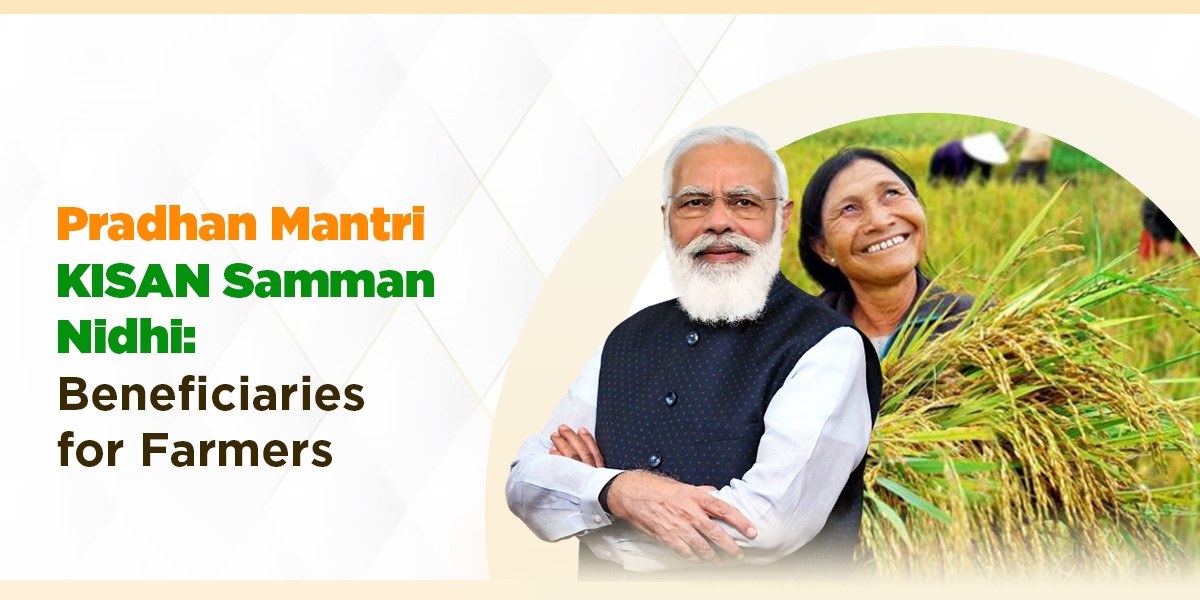
This central sector scheme aims to provide direct income support to landholding farmers’ families. Through PM-KISAN, the government ensures that cultivators have a reliable source of financial assistance to purchase seeds, fertilizers, and other agricultural inputs, along with covering household expenses.
Objectives of PM-KISAN Yojana
The scheme was designed with certain clear objectives:
- Financial Support – To provide small but assured income support of ₹6,000 annually to farmers.
- Encouragement for Agriculture – To help farmers procure essential agricultural inputs such as seeds, fertilizers, machinery, and pesticides.
- Reducing Farmer Distress – By giving a regular cash flow, the government intends to reduce dependency on moneylenders.
- Inclusive Welfare – Extending benefits not only to small and marginal farmers but to all landholding farmers across the country.
- Direct Benefit Transfer (DBT) – Ensuring full transparency by directly crediting the benefit to farmers’ bank accounts.
Benefits of the Scheme
Every landholding farmer family covered under the scheme receives ₹6,000 per year, payable in three equal installments of ₹2,000 each, every four months.
The payments are made directly into the beneficiary’s bank account, ensuring zero middlemen, delays, or leakages.
This direct cash support enables farmers to:
- Buy seeds, fertilizers, and crop protection products.
- Invest in small-scale farm equipment.
- Meet urgent domestic needs.
- Ensure financial stability during agricultural off-seasons.
Definition of a Farmer’s Family
For the purpose of PM-KISAN, a farmer’s family includes:
- The husband,
- The wife, and
- Their minor children
The family must own cultivable land as per state or UT land records. This definition ensures that the benefit is family-based rather than individual-based.
Eligibility Criteria
When PM-KISAN was launched in 2019, the benefits were initially targeted only at Small and Marginal Farmers (SMFs) with up to 2 hectares of cultivable land. However, in June 2019, the scheme was expanded to cover all landholding farmer families, regardless of the size of their landholding.
Eligible Farmers:
- Farmers with cultivable land in their name.
- Families with valid land ownership documents.
- Farmers engaged in cultivation within both rural and urban areas (if the land is under actual cultivation).
Who Are Excluded?
Not all categories of farmers are eligible. To ensure that the scheme benefits truly needy families, the following groups are excluded:
- Institutional Landholders – Any land owned by institutions or organizations is not eligible.
- High-ranking officials and public representatives – Families where even one member is:
- Former or present holders of constitutional posts.
- Former/present ministers, MPs, MLAs, mayors of municipal corporations, or chairpersons of district panchayats.
- Government employees and pensioners –
- All serving or retired officers and employees of Central/State government ministries, PSUs, autonomous bodies, and local bodies.
- Pensioners receiving ₹10,000 or more per month.
- Exceptions: Multi-tasking staff (MTS), Class IV, or Group D employees are still eligible.
- Income Taxpayers – Any person who has paid income tax in the last assessment year is excluded.
- Professionals – Doctors, engineers, lawyers, chartered accountants, and architects registered with professional bodies and practicing are also excluded.
Key Conditions
- The cut-off date for determining eligibility was fixed as 1st February 2019.
- Any changes in land ownership after this date (except succession due to the death of the landholder) will not affect eligibility for the next five years.
- Succession-based land transfers (inheritance after death) are recognized and eligible.
- Tenant farmers or cultivators who do not own land are not eligible.
Identification of Beneficiaries
The responsibility of identifying eligible farmers lies entirely with the State and UT Governments. They use the existing land ownership records to prepare lists of beneficiaries.
The PM-KISAN portal is the central platform where state governments upload verified beneficiary data.
Farmers need to submit:
- Name, age, gender, and category (SC/ST, etc.)
- Aadhaar number (mandatory)
- Bank account number with IFSC code
- Mobile number (optional, but recommended for updates via SMS)
Process of Benefit Transfer
The process of transferring installments under PM-KISAN is highly structured to ensure transparency and efficiency.
- Farmers register with local officials (Patwari/revenue officer) or through the portal.
- Data is verified by Block/District officers and then authenticated by State Nodal Officers (SNOs).
- Verified data is uploaded to the PM-KISAN portal.
- Multi-level verification is conducted by NIC, PFMS, banks, and NPCI.
- Funds are released in batches after sanction orders are generated.
- The benefit is credited directly into the farmer’s bank account.
This Direct Benefit Transfer (DBT) mechanism eliminates delays, corruption, and ensures timely delivery.
Farmers’ Corner on PM-KISAN Portal
To make the scheme more farmer-friendly, the government has created a dedicated Farmers’ Corner on the PM-KISAN portal. Farmers can:
- Register as New Farmer – Submit details online for enrollment.
- Edit Aadhaar Details – Correct discrepancies in name spelling or details.
- Check Beneficiary Status – Track installment payment using Aadhaar, bank account number, or registered mobile number.
Transparency Measures
- Lists of beneficiaries are displayed publicly at Panchayats.
- SMS alerts are sent to farmers when the installment is credited.
- Farmers can also track payments directly on the portal.
Grievance Redressal
If a farmer believes they are wrongly excluded, they can approach the District Level Grievance Redressal Monitoring Committee.
Complaints can also be addressed through the Farmers’ Corner and State Nodal Officers.
Special Cases
- Multiple Families on a Single Landholding – Each family is eligible for ₹6,000 if land records recognize them separately.
- Landholdings in Different Villages/States – A farmer family can avail benefits only from one place. Duplicate payments are not allowed.
- Missed Installments – If a farmer does not receive installments in a given period (due to technical reasons or verification delays), the missed payments are credited later, provided they meet eligibility.
Coverage of Urban Farmers
PM-KISAN does not differentiate between rural and urban cultivable land. If land located in an urban area is under cultivation, the farmer is eligible.
However, micro plots that are not cultivable are excluded.
Impact of PM-KISAN Yojana
Since its launch, PM-KISAN has benefitted crores of farming families across India. Some of the key impacts include:
- Providing timely cash flow before sowing seasons.
- Reducing farmer dependency on informal credit.
- Supporting rural households in meeting both agricultural and domestic expenses.
- Creating a nationwide digital database of farmers through Aadhaar-linked accounts.
Challenges
While the scheme has been widely appreciated, some challenges remain:
- Updating land records across states.
- Ensuring tenant farmers and sharecroppers (who do not own land) are not left behind.
- Addressing delays in state-level data verification.
- Spreading awareness among farmers about online facilities like Farmers’ Corner.