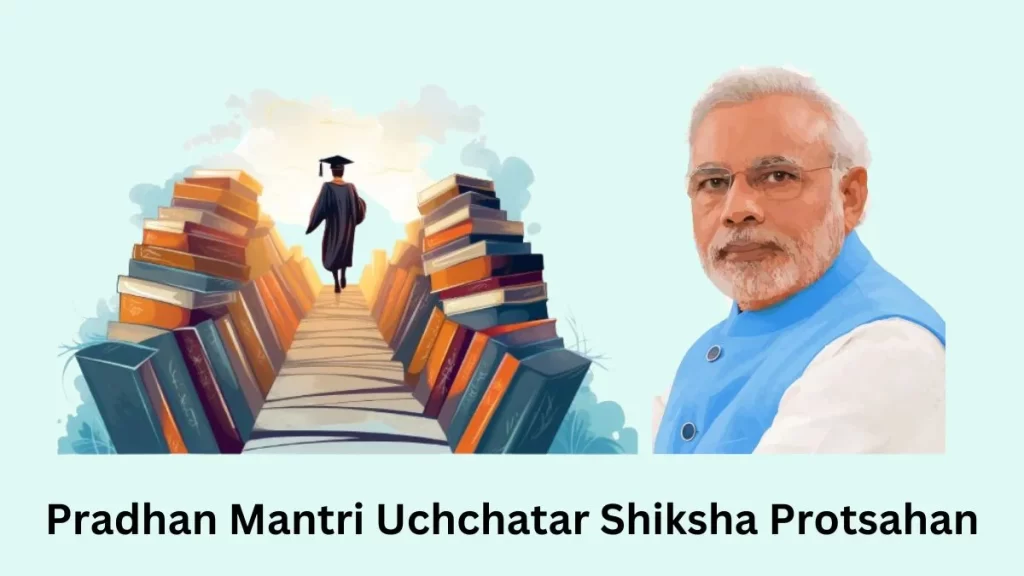
Education is often considered the most powerful tool for transforming individual lives and uplifting entire societies. Yet, for many families in India, the dream of higher education for their children often gets overshadowed by financial constraints. Recognizing this, the Government of India has introduced several schemes to support students from economically weaker backgrounds. One such flagship initiative is the Pradhan Mantri Uchchatar Shiksha Protsahan (PM-USP) Yojana, under which the Central Sector Interest Subsidy Scheme (CSIS) plays a crucial role.
The CSIS Scheme, launched in 2009 by the Ministry of Education (formerly MHRD), ensures that students from low-income families can pursue higher education without worrying about paying interest during their study years. With modifications approved by the Union Cabinet in January 2022, the scheme has been upgraded to align with present-day needs, effective from 1st April 2022.
Objective of the Scheme
The primary goal of the PM-USP CSIS Scheme is simple yet powerful:
“No student should be denied higher education due to lack of financial resources.”
By providing full interest subsidy during the moratorium period (i.e., the duration of the course plus one year), the government shoulders the financial burden of interest, allowing students to concentrate on their studies. After the moratorium, students are responsible for repaying the loan along with interest.
Thus, the scheme effectively reduces the stress of financial liability during the crucial academic years.
Scope of the Scheme
The scheme has a broad scope and covers multiple areas:
- Adoption by Banks
All Scheduled Banks, Regional Rural Banks (RRBs), and Cooperative Banks are required to adopt this scheme. It is directly linked to the Indian Banks’ Association (IBA) Model Education Loan Scheme, which ensures uniformity across institutions. - Coverage Limit
- Interest subsidy is available for loans up to ₹10 lakh only.
- If a student has taken more than ₹10 lakh as an education loan, subsidy is provided only on the first ₹10 lakh.
- Collateral-Free Loans
- For education loans up to ₹7.5 lakh, no collateral security or third-party guarantee is needed.
- Banks are mandated to cover such loans under the Credit Guarantee Fund Scheme for Education Loans (CGFSEL).
- Moratorium Coverage
- The Government of India pays the entire interest during the course duration plus one year.
- After this moratorium, repayment begins, and the student has to bear the interest as per bank norms.
Eligibility Criteria
To ensure that the subsidy reaches the deserving candidates, strict eligibility guidelines have been laid down:
- Type of Loan
- Only students who take loans under the IBA Model Education Loan Scheme are eligible.
- Family Income Limit
- Annual gross parental/family income must not exceed ₹4.5 lakh.
- Income proof must be certified by a competent authority designated by the State Government.
- Type of Institution
Students must be enrolled in:- NAAC-accredited institutions, or
- Courses accredited by the National Board of Accreditation (NBA), or
- Institutions of National Importance (IITs, NITs, AIIMS, etc.), or
- Centrally Funded Technical Institutions (CFTIs).
- Courses Covered
- Only professional and technical courses (such as engineering, medicine, management, law, etc.) are included.
- Available for undergraduate, postgraduate, and integrated courses.
- Can be availed only once per student (UG or PG).
- Exclusions
- Students already availing scholarships or fee reimbursements from Central/State Government are not eligible.
- Students who drop out midway or are expelled due to academic/disciplinary reasons are disqualified.
- Exception: If discontinuation is due to medical reasons, subsidy continues (with valid proof).
Interest Rates
- The interest rate for education loans is based on the Benchmark Prime Lending Rate (BPLR)/Base Rate of individual banks.
- During the moratorium, the government pays simple interest.
- After moratorium, the student pays both principal and interest as per the loan agreement.
Moratorium Period
One of the biggest advantages of this scheme is the moratorium period.
- Definition: Course duration plus one year.
- Example:
- A student pursues a 4-year B.Tech course.
- Moratorium = 4 years (course) + 1 year = 5 years total.
- Government pays full interest during this time.
- From the 6th year, repayment begins.
This ensures that students start repayment only after completing their course and hopefully securing employment.
Income Proof and Certification
To prevent misuse of the scheme, income verification is compulsory:
- Students must produce an income certificate issued by the competent authority designated by the State Government.
- Certification is based on economic status, not caste or community background.
- Banks rely on this certification for granting benefits under CSIS.
Competent Authority
The Ministry of Education has advised State Governments to designate appropriate authorities to issue income certificates.
Banks implement the scheme based on these notifications, communicated via District Level Consultative Committees (DLCCs).
Nodal Bank
The scheme is implemented through Canara Bank, which acts as the Nodal Bank for the Ministry of Education.
- It manages implementation, monitoring, and disbursement of subsidy.
- Claims from banks are routed through Canara Bank.
Academic Year Applicability
The modified CSIS scheme is applicable from the academic year 2022-23 onwards (for loans sanctioned after 1st April 2022).
Approved Institutions and Courses
- List of CFTIs and Institutions of National Importance: Available on the Ministry of Education website.
- NAAC Accredited Universities: Available on NAAC’s official website.
- NBA Recognised Courses: Available on NBA website.
- In case of confusion about course eligibility, banks may consult UGC, AICTE, or respective councils.
It is the responsibility of the lending bank to ensure that only approved courses are covered under the scheme.
Monitoring Mechanism
To ensure transparency and accountability, a real-time monitoring dashboard is maintained by Canara Bank.
The dashboard tracks:
- Number of applications received
- Sanctions made
- Subsidy released and adjusted
- Repayments and NPAs
- Distribution across gender, socio-economic status, and geography
This enables the Ministry of Education to measure the impact and outcome of the scheme.
Disbursement of Subsidy
- Subsidy is released by the Government to Canara Bank on a quarterly/half-yearly/yearly basis.
- Canara Bank then credits the subsidy directly into the education loan account of the beneficiary through DBT mode using the PFMS Portal.
- Banks must submit yearly claims on behalf of eligible students.
Important:
- If a bank fails to claim the subsidy on time, backlog claims are not entertained.
- The responsibility lies solely with the lending bank, not the Ministry.
Additional Interest Concession
- Under the IBA Model Scheme (2021), banks may offer a 1% interest concession if the student or family pays interest during the study/moratorium period.
- However, this concession is separate and should not be confused with the Government’s subsidy.
Regional Rural Banks (RRBs)
- RRBs must submit their claims directly to Canara Bank (not via sponsor banks).
Audit
- A statutory audit is conducted annually along with the bank’s regular audit to ensure proper use of government funds.
Benefits of the Scheme
- Financial Relief: Students from poor families can pursue higher education without worrying about interest during studies.
- Encourages Professional Courses: Helps create skilled manpower in technical and professional fields.
- Equity in Education: Promotes inclusion by ensuring that economic background does not become a barrier.
- Ease of Repayment: Students begin repayment after course completion, when they are better positioned to earn.
- Boost to National Growth: By supporting youth education, the scheme indirectly strengthens India’s economy.
Challenges in Implementation
While the scheme is beneficial, there are some challenges:
- Lack of awareness among students and parents.
- Delays in income certificate issuance.
- Banks sometimes fail to claim subsidies on time.
- Exclusion of students from non-accredited institutions limits access.
To overcome these, awareness campaigns, streamlined certification processes, and stricter monitoring are required.