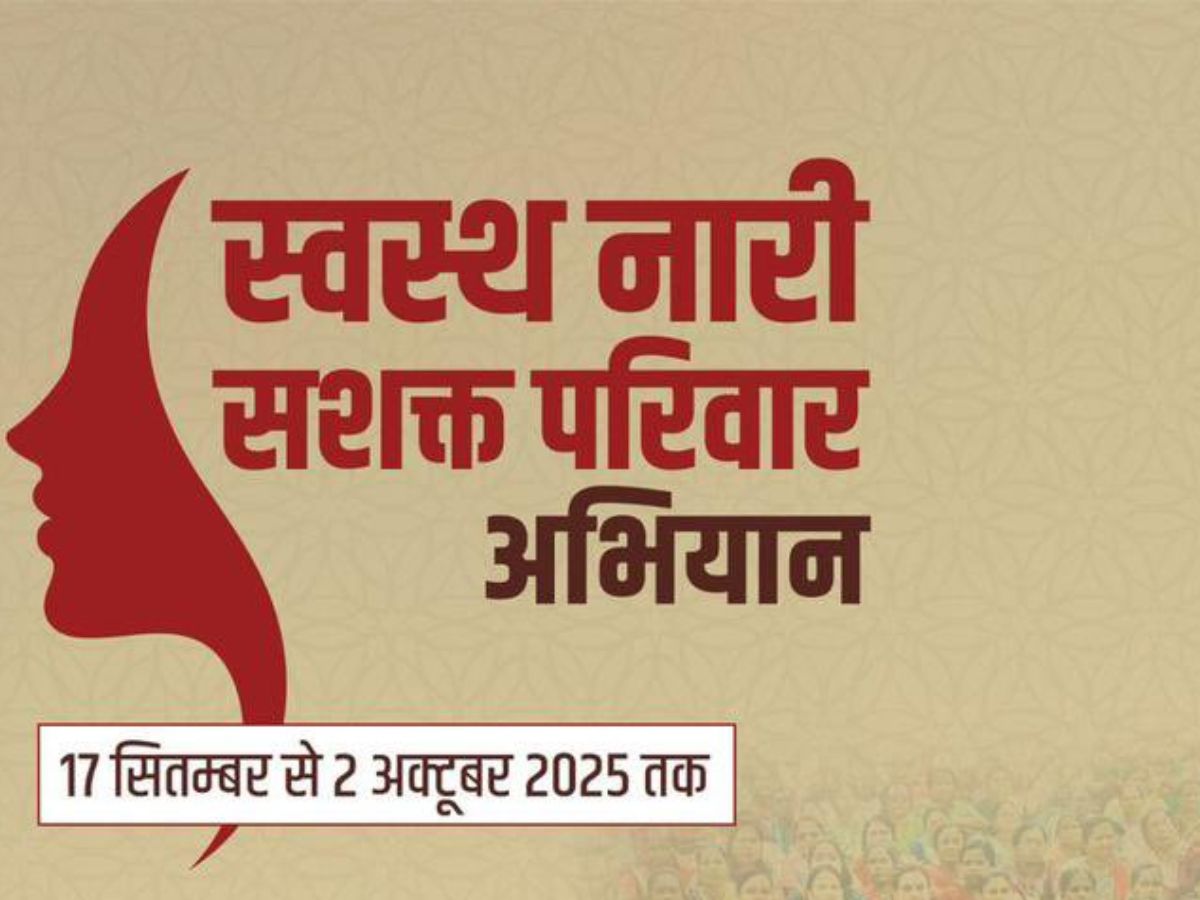
A healthy woman is the cornerstone of a healthy family, and a healthy family forms the foundation of a strong and prosperous nation. Recognizing the critical role of women in the well-being of families and communities, the Ministry of Health and Family Welfare (MoHFW), Government of India, has launched a nationwide campaign titled “Swasth Nari, Sashakt Parivar Abhiyaan”. This initiative aims to empower women, improve maternal and child health, strengthen preventive healthcare, and foster healthy lifestyles for families across India. The campaign emphasizes early detection of diseases, access to essential healthcare services, nutritional awareness, and health education for women, adolescent girls, and children. By addressing women’s health comprehensively, the program envisions building empowered families and, ultimately, a healthier and stronger India.
The campaign is scheduled to run from 17th September 2025 to 2nd October 2025, coinciding with Poshan Maah and focusing on preventive, promotive, and curative healthcare interventions at the last mile. Health camps under this initiative will be organized across Ayushman Arogya Mandirs (AAMs), Community Health Centers (CHCs), District Hospitals (DHs), Sub-Health Centers (SHCs), and other healthcare facilities nationwide.
Launch and Dates
The national-level launch of the campaign will take place on 17th September 2025 in Madhya Pradesh, presided over by the Hon’ble Prime Minister of India, in the presence of the Union Minister of Health & Family Welfare, State Chief Ministers, and other dignitaries. Simultaneously, the campaign will be virtually launched across all States and Union Territories, enabling live telecast and participation of Governors, Ministers, Members of Parliament, and other officials from their respective regions. Following the launch, health camps and community outreach activities will continue until 2nd October 2025, ensuring a comprehensive nationwide coverage.
Objectives of the Scheme
The Swasth Nari, Sashakt Parivar Abhiyaan is designed with several key objectives:
- Promote Women-Centric Healthcare: Deliver preventive, promotive, and curative healthcare services to women at the community level.
- Strengthen Maternal and Child Health: Facilitate Antenatal Care (ANC), immunization, growth monitoring, and postnatal support.
- Early Detection of Diseases: Screen women for Non-Communicable Diseases (NCDs) like hypertension, diabetes, oral, breast, and cervical cancer, as well as communicable diseases such as tuberculosis and sickle cell anemia.
- Address Nutritional Needs: Promote awareness on nutrition, anemia prevention, menstrual hygiene, and healthy diets for women and adolescent girls.
- Empower Families: Encourage healthier lifestyle practices in households, involving women as primary decision-makers in health and nutrition.
- Blood Donation Awareness: Organize voluntary blood donation drives to support healthcare for trauma patients, surgeries, cancer treatments, and management of hemoglobin disorders.
- Community Engagement: Foster active participation of Self-Help Groups (SHGs), Panchayati Raj Institution representatives, local influencers, and volunteers to maximize outreach.
- Integration with Government Schemes: Converge with other central programs like PM-JAY, Ayushman Vaya Vandana, ABHA, and Poshan initiatives for holistic health benefits.
Key Features of the Scheme
The Swasth Nari, Sashakt Parivar Abhiyaan is characterized by its structured approach, focusing on preventive, promotive, and curative healthcare interventions. Its features include:
- Nationwide Health Camps: Organized at AAMs, CHCs, DHs, PHCs, and Sub-Health Centers (SHCs) across all States and Union Territories.
- Specialist and Routine Services: Health camps include both specialist screenings (for NCDs and cancer) and routine services such as maternal and child health monitoring, immunization, nutrition, and reproductive health services.
- Intensive Community Mobilization: Pre-campaign awareness activities include door-to-door mobilization, school and anganwadi engagement, involvement of SHGs, PRI members, and local influencers.
- Awareness and Education: IEC activities such as folk songs, street plays, quizzes, demonstrations on nutrition, menstrual hygiene campaigns, and lifestyle counselling.
- Integration with Digital Health Platforms: Enrollment and services via ABHA, Ayushman Vaya Vandana, and PM-JAY platforms for e-card distribution, grievance redressal, and beneficiary tracking.
- Blood Donation Drives: Organize voluntary blood donation camps at all blood banks to encourage safe blood collection and new donor registration.
- AYUSH and Wellness Services: Conduct yoga, Ayurveda, and herbal medicine sessions to promote holistic well-being.
- Monitoring and Reporting: Facilities are required to share high-quality photos and short videos daily with State nodal officers for verification and uploading to central dashboards for real-time monitoring.
Eligibility Criteria
The campaign primarily targets women, adolescent girls, and children, with a special focus on vulnerable and underserved populations. Eligibility is defined as:
- Women of Reproductive Age: Including pregnant women and lactating mothers.
- Adolescent Girls: School and out-of-school girls aged 10-19 years.
- Children: Under five years for immunization, growth monitoring, and nutrition interventions.
- Vulnerable Populations: Women in tribal areas, urban slums, and remote rural communities.
- Community Workers: ASHAs, Anganwadi Workers, SHG members, and PRI representatives to ensure maximum outreach.
Scholarship and Financial Support
While the Swasth Nari, Sashakt Parivar Abhiyaan primarily focuses on healthcare, it integrates with other government schemes that provide financial and nutritional support. Examples include:
- PM-JAY Enrollment and Benefits: Provision of health insurance coverage for eligible families.
- Ayushman Vaya Vandana and ABHA Card Enrollment: Enables access to health services and benefits.
- Nutrition Support: Distribution of iron, folic acid, calcium supplements, fortified food items, and guidance for a balanced diet.
The campaign ensures all services are free of cost for beneficiaries, including screening, diagnostics, and health counselling.
Reservation Policy
The scheme prioritizes reaching out to women and children from vulnerable sections of society, ensuring equitable access to health services. While there is no formal caste-based reservation, special focus is given to:
- Tribal populations and communities in remote areas.
- Urban slums and underprivileged communities.
- Women engaged in informal sector employment.
- Marginalized groups including women beneficiaries of Self-Help Groups and PRI members.
Distribution of Services
Healthcare services under the campaign are distributed across multiple levels of facilities:
- Ayushman Arogya Mandirs (AAMs): Comprehensive health camps for specialized and routine services.
- Community Health Centres (CHCs): Maternal and child health, immunization, and disease screening.
- District Hospitals (DHs): Specialist consultations, advanced diagnostics, and referral services.
- Sub-Health Centres (SHCs): Basic health screening, routine maternal care, anemia testing, and health education.
- Outreach Camps: Door-to-door mobilization, school-based sessions, and community gatherings for awareness campaigns.
Application Process (Step by Step)
Beneficiaries can access services through the following steps:
- Identification: Eligible women, adolescent girls, and children are identified by ASHAs, Anganwadi workers, SHG members, and PRI representatives.
- Enrollment: Beneficiaries are enrolled at health camps or through medical institutions, receiving ABHA and Ayushman Vaya Vandana cards where applicable.
- Screening: Health checks for NCDs, anemia, tuberculosis, and sickle cell disease are conducted at camp venues.
- Counselling: Women receive counselling on maternal health, nutrition, menstrual hygiene, and mental well-being.
- Follow-Up: Referral to higher-level facilities for confirmatory tests, specialized treatment, or further care if required.
- Documentation: All services and interactions are recorded in camp registers, and photos/videos of camp activities are uploaded for central monitoring.
Renewal and Follow-Up Policy
While most services under the campaign are one-time interventions, certain aspects include follow-up mechanisms:
- Maternal and Child Health: Continuous monitoring of pregnancy, immunization schedules, and growth checks for children.
- Chronic Disease Management: Follow-up for hypertension, diabetes, and other NCDs identified during screening.
- Nutrition and Supplementation: Distribution of IFA, calcium, and fortified food items with regular follow-up for compliance.
- ABHA and PM-JAY Cards: Renewal and verification of health and insurance cards as needed.
Monitoring and Reporting
The success of Swasth Nari, Sashakt Parivar Abhiyaan relies heavily on strict monitoring and reporting mechanisms:
- State Nodal Officer: Single-point contact responsible for overall readiness, supply management, media coordination, and daily reporting.
- District Nodal Officer: Supervises camp implementation, consolidates data, and reports to the state level.
- Facility Nodal Officer: Ensures execution of health camps, data entry, and uploading of photos/videos.
- Blood Bank Nodal Officer: Mobilizes donors, ensures safe collection, and records data on e-RaktKosh.
Daily reporting includes high-resolution photos (at least 5 per day) and short videos (30–60 seconds) showcasing camp activities and beneficiary participation.
Key Activities Under the Campaign
- Screening Programs: For NCDs (diabetes, hypertension), oral, breast, and cervical cancers.
- Maternal & Child Health Services: ANC, PNC, immunization, MCP card distribution, and high-risk pregnancy referrals.
- Nutritional Interventions: Hb testing, iron and calcium supplementation, POSHAN activities, diet counselling, and Annaprashan ceremonies for infants.
- Mental Health Awareness: Counselling sessions and community awareness programs.
- Menstrual Hygiene Awareness: Free sanitary pad distribution and education on menstrual health.
- Blood Donation Drives: Voluntary donor mobilization and registration.
- Community Engagement: Street plays, folk songs, quizzes, health pledges, and participatory cultural programs.
- Integration with Government Programs: PM-JAY, ABHA, Ayushman Vaya Vandana, and Poshan initiatives.
- AYUSH Wellness Services: Yoga, Ayurveda, and herbal medicine demonstrations to promote holistic health.
- Nikshay Mitra Volunteer Enrollment: Support for TB patients through nutrition, counselling, and livelihood linkages.
Roles and Responsibilities
- Medical Colleges and Institutions: Organize health camps, designate nodal officers, and coordinate with local authorities.
- State and District Authorities: Ensure logistics, dignitary participation, and supervision of health camps.
- Community Mobilizers: ASHAs, Anganwadi workers, SHGs, PRI members, and volunteers engage in door-to-door awareness, beneficiary identification, and camp promotion.
- Health Facility Staff: Conduct screenings, counselling, immunization, and follow-ups.
Felicitation and Recognition
Outstanding contributors such as ASHAs, Anganwadi Workers, SHGs, and other volunteers will be recognized and felicitated for their active participation and achievements. State and district performances will be evaluated for recognition under PMAY-U Awards 2025 and other government acknowledgements.